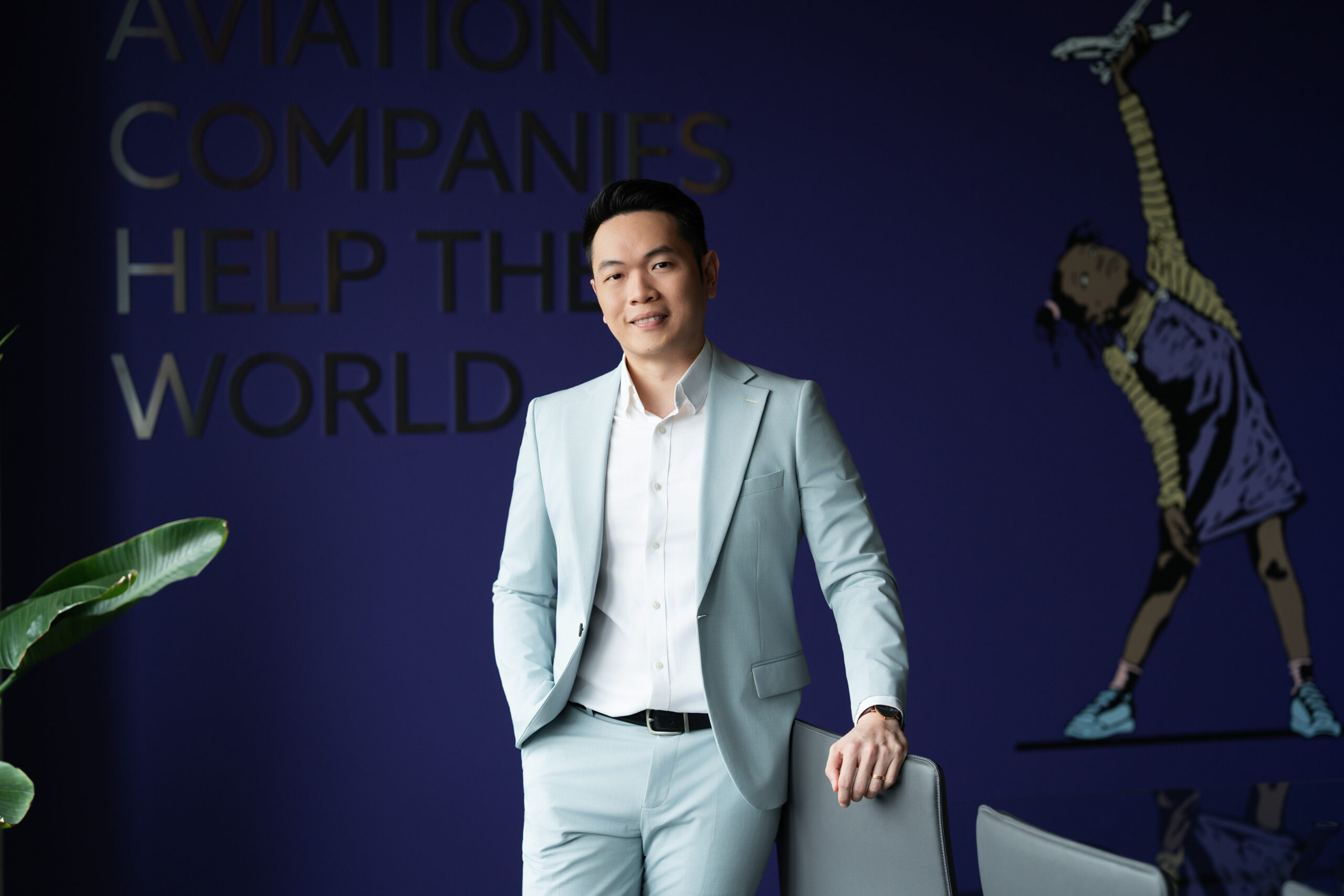
The Asian aviation aftermarket is changing. Joshua Loke Ewe Meng, Business Development Manager at Magnetic Trading (Asia), sees it in the way customers source components, structure their requests, and plan around a fleet that is overwhelmingly leased. We asked him what’s really driving buyer behaviour across Asia today.
Finding the right part is the starting point, not the whole story. For most operators, the real variables are time and planning.
“Ideally, an operator wishes to locate a part that drives cost efficiency,” Joshua explains. “But identifying the requirement of that part later than expected drives the cost skyward when the need is urgent and there’s a deadline to catch.”
The logic is simple, and it favours those who look ahead. The earlier a defect is identified and a requirement forecast, the more options an operator has to lay out the best choices. Leave it late, and the market stops working in your favour. Availability is rarely the constraint. Time is.
The Rise of the Detailed RFQ
One of the clearest shifts Joshua has seen in Asia is in how customers ask for quotes.
“Customers are transforming to a more detailed ‘Request for Quote,'” he says. Instead of a thin initial enquiry followed by a chain of back-and-forth emails to establish the actual condition of a part, buyers are front-loading the detail – listing everything a supplier needs to respond fully in one go.
The benefit is efficiency on both sides. Detailed requests eliminate incomplete quotes and focus attention on the responses that genuinely match the required conditions.
There is, however, a flip side. “Taking too many precautions leads to un-materialised leads,” Joshua notes. Customers sometimes request quotes too early – before troubleshooting is complete, or before realising an item is already covered under an existing contract. Precision helps, but only when the underlying requirement is real.
The Lease Factor
Nothing shapes purchasing behaviour in Asia quite like the region’s reliance on leased aircraft.
“Having a region where the majority of aircraft are leased restricts certain decision-making,” Joshua explains. Operators need to be cautious about which parts they accept, as everything must meet the minimum requirements of the lease contract.
That reality has real commercial consequences. PMA and DER solutions – common cost-saving routes in other markets – gain little traction in Asia, held back by ownership rules and contract restrictions. The result is that repair costs tend to run higher.
But there’s an upside further down the line. When an aircraft moves to its next lessee, that operator inherits far fewer headaches – every certified part already conforms to the rules and regulations, giving the incoming operator greater confidence in the asset.
A Region Building Its Own Supply Chain
Perhaps the most significant trend is a change in how companies across Asia are approaching stock.
“Companies are taking bolder actions in procuring and stocking items ahead of requirements,” Joshua says. Warehouses and partnerships are being established to keep costs down while ensuring full coverage the moment a requirement surfaces.
Historically, the majority of parts flew into the region from the USA and Europe. That dependency is now creating an opening. For newer companies willing to build stocking capability within Asia itself, there’s a genuine investment opportunity – positioning material closer to the operators who need it, rather than waiting on long-haul supply lines.
It also sharpens the stakes around planning. As Joshua puts it, a poorly planned schedule is exactly the scenario some suppliers quietly hope for – because urgency is where the most profitable deals are made.
Plan Early, or Pay Later
The through-line across all of this is planning. Whether it’s forecasting a requirement early, structuring a detailed RFQ, navigating lease restrictions, or positioning stock ahead of demand, the operators who come out ahead in Asia are the ones who think early – and the suppliers worth partnering with are the ones who help them do it.
 go back