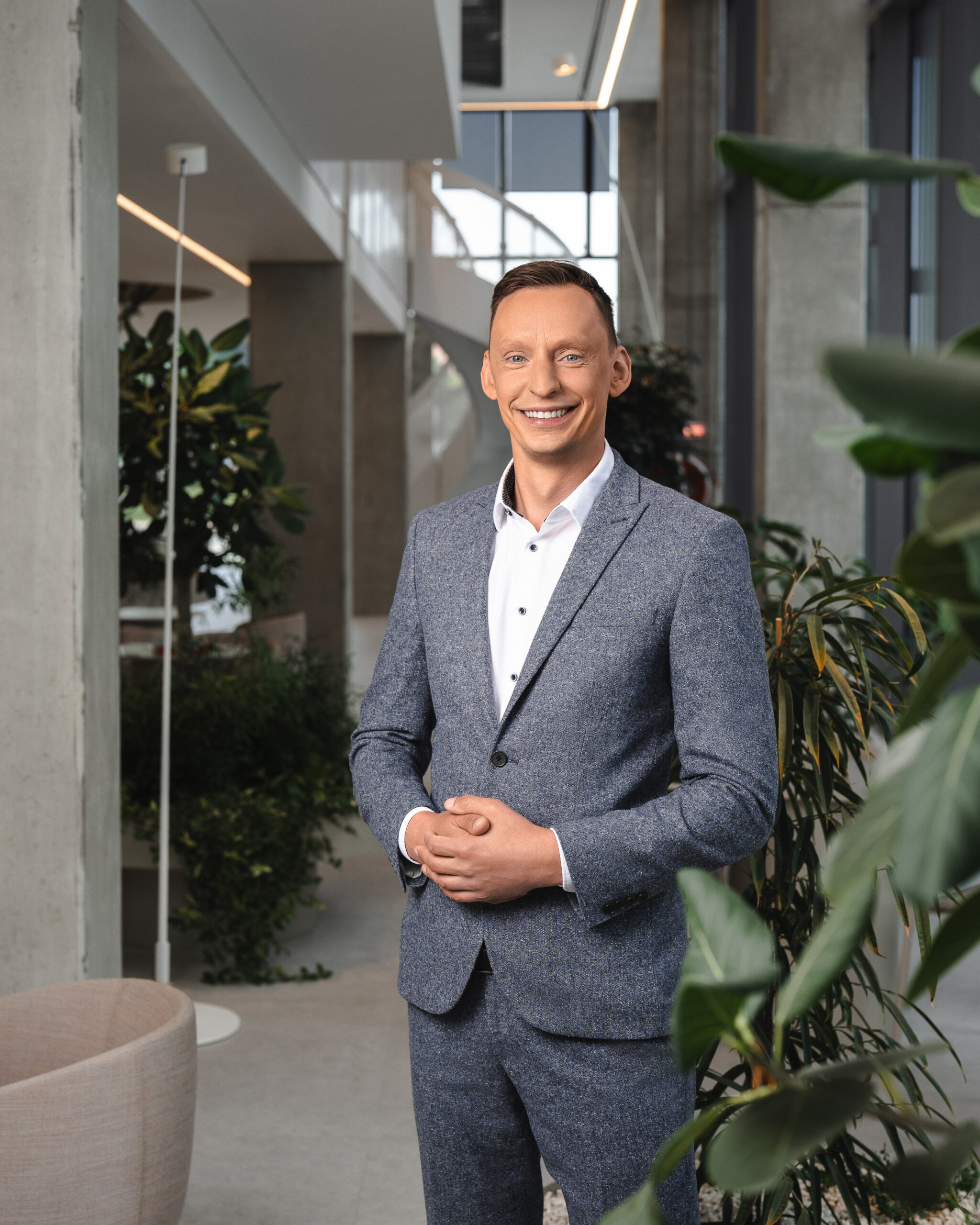
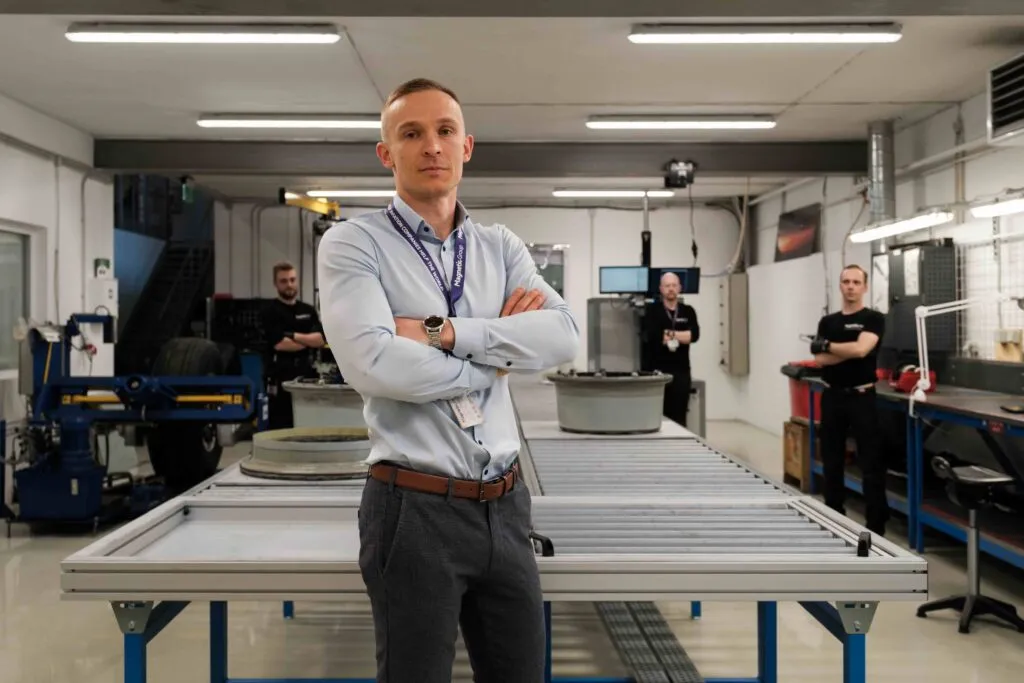
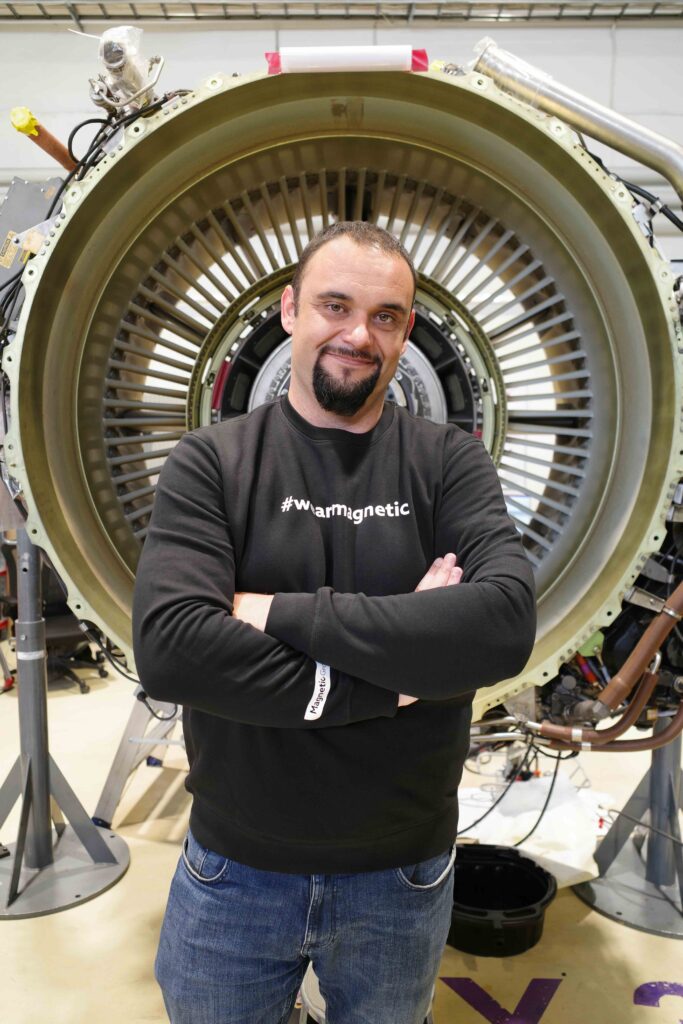
Martynas Balsys, Business Development Director at Magnetic Trading, starts every morning with a blank page. Not metaphorically – there is no carry-over queue, no predictable rhythm, no standard Tuesday.
“I never had two equal days,” he says. “I always start from scratch and create a new story.”
Some days that story is straightforward. A known operator, a standard request, a unit in stock. Done. Most days, it isn’t quite that clean. The variables shift – different aircraft types, different geographies, different urgency levels, different documentation histories.
What stays constant is the need to move quickly and get it right. In wheels and brakes trading, those two things are not negotiable.
A Piece of Metal
Magnetic Trading sources and supplies aircraft parts – including wheels and brakes – to operators across the globe. It is a business built on speed, reliability, and knowing the difference between a component that is ready to fly, and one that merely looks the part.
Wheels and brakes sit in an unglamorous corner of aviation. Nobody writes about them until something goes wrong. And when something goes wrong, the clock starts immediately.
An aircraft on the ground is not just an inconvenience. It is an airline’s worst financial situation playing out in real time – passengers to rebook, slots to lose, engineers waiting with nothing to do. Every hour compounds the cost.
The component that fixes it needs to be close, it needs to be serviceable, and it needs the right paperwork. All three. Not two of three.
On that last point, Martynas is unequivocal. “Second-hand components – it is not about how well they are built. It is about how good the paperwork is. Even if an item is perfectly built, but documentation is lacking – it is just a piece of metal.“
That is not an abstraction. It is the operational reality of used serviceable material. A wheel assembly with a clean, complete, traceable history is a product. The same assembly with gaps in its records is a liability, regardless of its physical condition.
Certification, traceability, and maintenance records – these are not administrative formalities that exist alongside the component. They are the component.
Operators who source their own material sometimes discover this distinction at the worst possible moment, when an inspector flags missing documentation and the clock is still running.
The Operators Who Sleep Well
The more common problem, though, is simpler than documentation. It is having nothing at all.
“The biggest issue is having no plan,” Martynas says. “Wheels and brakes are something you always have to have spare stock of – to exchange with run-outs. Most airlines are now covered by agreements that handle this.”
“But there are still operators relying on their own material planners to source and stock these items independently. And when there is nothing to exchange, the costs come fast. Time to source, time to deliver, time to install. All of that while the aircraft is sitting.”
It is the kind of problem that looks entirely avoidable in hindsight and entirely inevitable in the moment. An operator without stock does not have the luxury of a measured procurement process. They have a grounded aircraft, a phone, and a very short window to fix it.
When that call comes in – a genuine AOG, an operator who needs a unit now – the first move is always to check internal stock. If Magnetic Trading has what is needed, the conversation is short. If not, the search goes to the wider market immediately, with geography as the primary filter.
A serviceable component on the wrong continent is not a solution. “Time is everything,” Martynas says. “The aircraft on the ground means loss.”
The operators with proper agreements and managed stock sleep better. The ones without are one bad day away from a very expensive lesson.
People Behind the Purchase Orders
The relationships that prevent those bad days are built slowly and maintained constantly. Martynas has suppliers and operators he has worked with for years – relationships that have outlasted market cycles, fleet changes, and more than a few difficult situations.
The conversations are not always about components.
“Under every corporation, there are people,” he says. “You have to put in the effort to understand not only the business demand, but also keep personal contact. With long-term partners, we talk not only about business – we talk about how the kids are doing, what we are up to after work.”
It sounds informal. It is also, in practice, the difference between a call that gets answered on a Saturday and one that goes to voicemail.
When an AOG situation lands, and you need someone to move fast on your behalf, you want to be calling a name, not a company. Trust in this business is built through consistency, follow-through, and the kind of ongoing contact that has nothing to do with the current transaction.
Let’s Go to Kuršėnai
Then there is Kuršėnai.
In the Magnetic Trading office, let’s go to Kuršėnai means one thing: kitchen, break, decompress.
It has nothing to do with the small Lithuanian city the name comes from – how it attached itself to a kitchen in an office is the kind of story that loses detail every time it gets told – and everything to do with the rhythm of a job that runs on sustained attention and constant communication.
The trading floor is not a quiet place. It runs on calls, negotiations, alignment across time zones, and the quiet background awareness of commercial targets that never fully switches off. That kind of work has a cost, and the Kuršėnai ritual is, in part, how the team manages it.
“It’s important for us not only to work, but to have a great time in the office too,” says Martynas. “Our work requires a lot of brain capacity – communicating and aligning with all parties, keeping revenue in the back of your mind. Gathering in the kitchen for even 30 minutes to reset is crucial. It’s always loud, always good laughs. That’s what keeps us sane.”
For Martynas, the balance is real. The job is genuinely interesting – every case a different puzzle, every day a different set of variables – but interesting and relentless are not mutually exclusive.
The kitchen is where both of those things get balanced out, where the team steps away from the screen and remembers that the people on the other end of their calls are, as Martynas puts it, just people too.
A blank page every morning. The right component in the right place before the end of the day.
Somewhere in between, Kuršėnai.
That is the job.
 go back