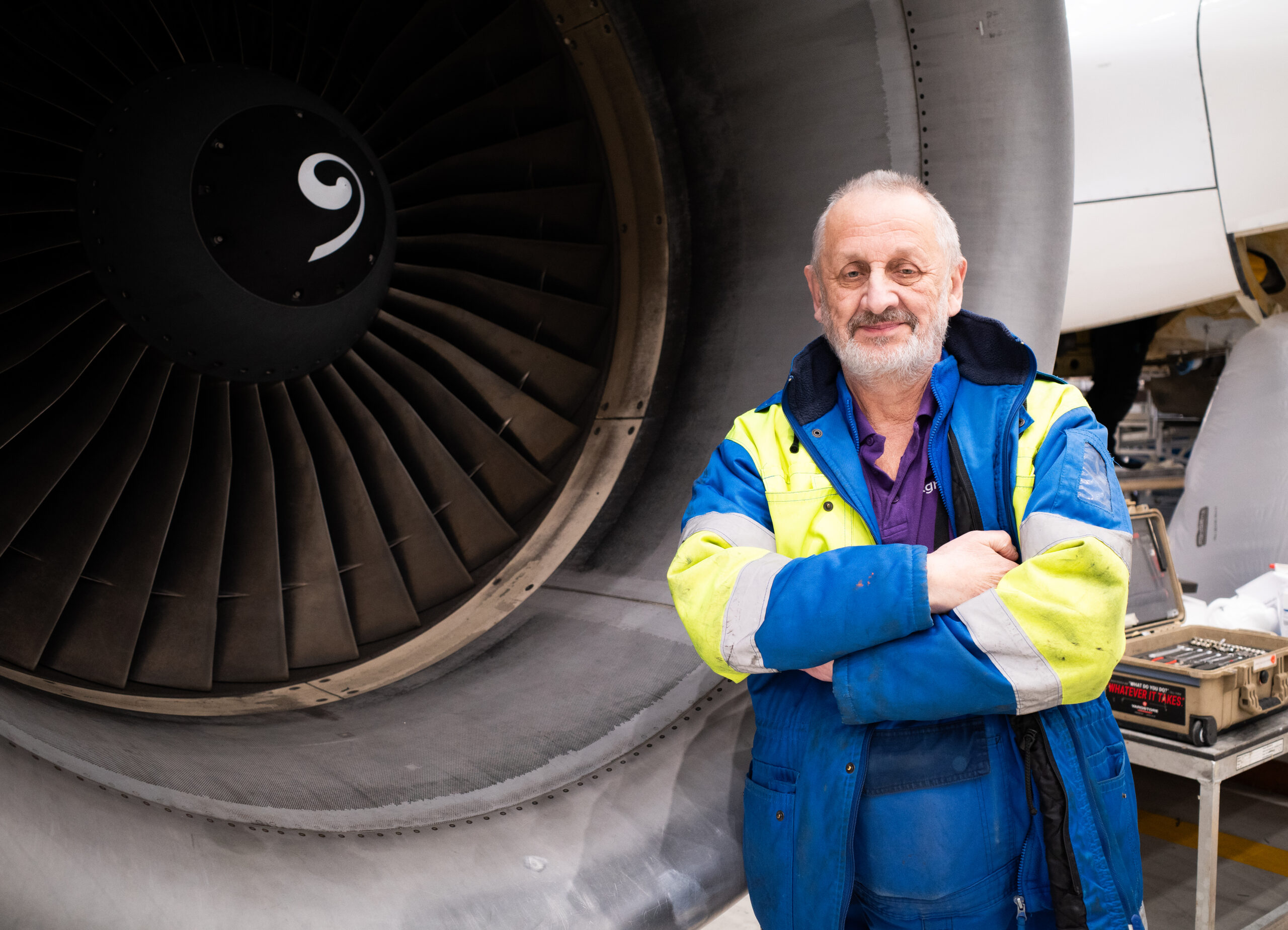
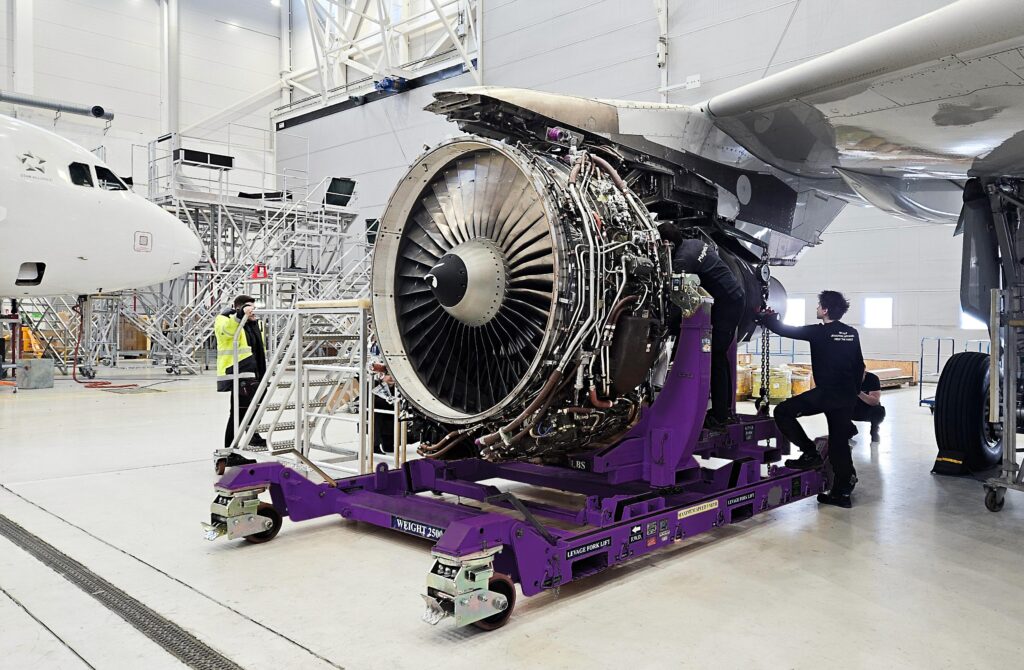
Winter, sometime in the late 1970s. No heated hangars. No de-icing trucks. Just Aleksandr Tsihatsjov, a broom, and an aircraft wing covered in snow that needs to be flight-ready by morning.
“Whether it was hot, cold, or snowy in winter, you took a shovel, cleaned your station, and started working,” he says. “I remember even cleaning an airplane wing with a broom myself.”
That was aviation maintenance back then.
And Aleksandr? He’s still here. Fifty years later.
If you ask Aleksandr Tšihatšjov how he got into aviation, you won’t get a romantic origin story. No childhood fascination with flight. No dreams of working on magnificent machines.
“In Tambov Oblast there was a school of technical civil aviation in a town called Kirsanov. A relative of mine was studying there and was one year older. My parents sent me to the same school. To be honest, there was no real difference to me whether I became an electrician, a chef, or a mechanic. I was not thinking very deeply about it at the time. I went there and stayed.”
And that’s pretty much been his approach ever since. Show up, do the work, stay.story.
Moving to Estonia: A Distribution System
Getting to Tallinn wasn’t exactly a choice either.
“Back then everything was centralized. When you finished school, you knew that representatives from different aviation authorities would come to recruit. Every republic had its own governance of civil aviation – Estonian, Lithuanian, and others. Management from each came to the schools and selected their own technical personnel. Estonia took five people at that time, including me.”
His first day was, to put it lightly, a bit of a culture shock.
“I saw an honor board on the wall and started reading the names. The first one was a serious man named Uno Jõeveer. For me, those names, surnames, and people were so different from what I was used to. I kept thinking, how will I work here?”
The answer came quickly. “Then it quickly became clear that even a man with a name like Uno Jõeveer spoke Russian.”
The Cold Hard Truth About “The Old Days”
When people talk about “how things used to be,” it’s usually nostalgia mixed with selective memory. Not with Aleksandr.
“The main thing I would say is that now it is warm to work here.”
That’s it. That’s the biggest change in 50 years. And he means it.
“Before, every maintenance task we did was done outside. It did not matter if it was summer or winter. We even replaced engines outside. There were no hangars at all.”
The old hangar, H01, wasn’t finished until the early 1990s – built specifically because Tu-154 maintenance could no longer be done on the open tarmac. The modern facility he works in now, H04? “Very new,” he says.
For most of his career, if it snowed, you grabbed a shovel. If the wing was icy, you grabbed a broom. Simple as that.
Brigades, Zones, and One Mistake
The organizational structure has changed over the decades. Back then, mechanics worked in brigades. Now they work in zones. Aleksandr was in the planners’ brigade – similar to a checker runner today, but with different responsibilities.
“Hydraulics and one engine were the responsibility of one brigade. Others worked on the fuselage, wings, and tail in separate brigades. Now the principle is similar.”
After 50 years and countless projects, you’d think he’d have some legendary story about a particularly challenging repair or a heroic save. Instead, his most memorable moment is simpler than that.
“The most memorable moments were at the beginning, when I did not know anything and could not do anything by myself. On one of my first projects I made a mistake. It was nothing dangerous or unfixable. Older mechanics quickly taught me that teamwork is important and that there is no need to do things alone, especially if you do not know what you are doing.”
So… Why Stay?
Here’s the real question: What keeps someone in the same job, at the same company, for half a century?
“We started here together with Yuri Desyatnikov. We came in the same year. I started in winter and he came in summer. Everyone else left.”
“I am one of the first to have work experience here. Everyone else left, worked somewhere else, and then came back. Only I stayed without leaving.”
And it’s not like there weren’t opportunities to leave. Back in the old days, collective farms offered work on diesel engines and ships at five times the salary.
“As an aviation technician I earned about 100 rubles. There the salary was close to 500 rubles. The required time to work in the job you were assigned was three years. After that, most people left. The offer was very good, so most left.”
So why didn’t he?
“Why I did not, I do not know.”
Maybe he doesn’t know. But here’s what we know.
Some people chase the next opportunity. Some people build something by staying put. Aleksandr Tsihatsjov is the latter.
Fifty years. Same commitment. Same standard. From cleaning wings with a broom to leading zones in climate-controlled hangars.
That’s not just longevity, it’s legacy.
 go back